
One of the most fundamental sensorial abilities of living organisms is temperature sensing. Failures to avoid noxious cold or heat could lead to tissue damage or fatal injury. Neurons capable of discriminating temperatures ranging from extreme cold (∼ –10°C) to extreme heat (∼ 60°C), are located in trigeminal ganglia, and in dorsal root ganglia innervating the head and the rest of the body, respectively. Temperature-sensitivity is possible by the expression of a subset of transient receptor potential (TRP) ion channels that are activated by cold or hot temperatures with different thresholds. Temperature sensation is intimately associated to nociceptive signaling in physiological and pathological conditions; hence, thermoTRP channels have been a focus of biomedical research as target for pain relief. To determine how this class of ion channels sense temperature represent a therapeutic opportunity for painful conditions where thermoTRP channels activity is altered. We are particularly focused on the TRP melastatin receptor type 8 (TRPM8) and TRP vanilloid type 1 (TRPV1) channels, which has been identified as the cold and heat receptors transducers in vivo. These channels are involved in inflammatory and neuropathic pain states and are overexpressed in various cancer types. The activation of TRPM8 and TRPV1, has an analgesic effect, that may counteract the symptoms of neuropathic pain. As temperature and pain responses are intimately linked, understanding how temperature is sensed, and where the temperature sensor is in the protein, has biological and clinical relevance, and opens a window for drug discovery. The role of lipids in thermoTRP and BK channels gating is also a focus of our research. To study thermoTRP channels we use biophysical (electrophysiological and thermodynamic analysis, patch fluorometry, tmFRET) and computational (molecular modeling) approaches.
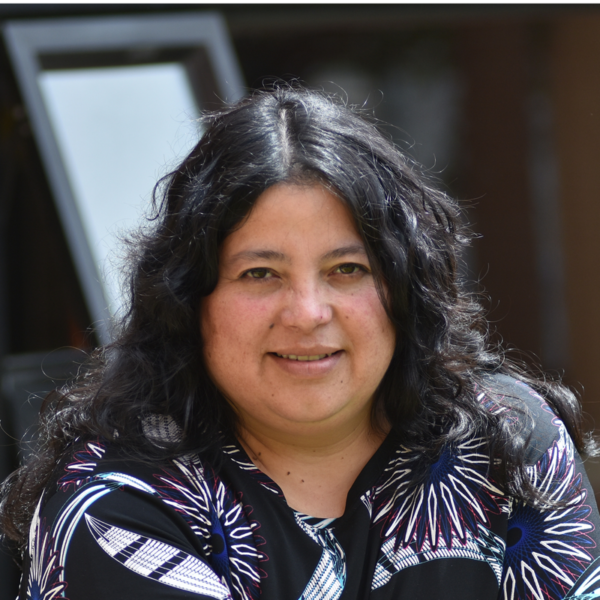
Dr. Karen Castillo, PhD
Profesora
Facultad de Ciencias de la Universidad de Valparaíso
Full Professor
Faculty of Sciences, Universidad de Valparaíso
Nódulos de especializaciónAreas of specialization
DirecciónAddress
Pasaje Harrington 287 Playa Ancha. Valparaíso, Chile.
Career milestones and education
-
Young Research Scientist
Laboratorio de Sensores Moleculares, CINV, Universidad de Valparaíso, CHILE.
-
Senior Postdoctoral Fellow
Laboratorio de Sensores Moleculares, CINV, Universidad de Valparaíso, CHILE.
-
Postdoctoral Fellow
Laboratorio de Estres Celular y Biomedicina, Facultad de Medicina, Universidad de Chile, CHILE.
-
PhD in Molecular/Cell Biology and Neuroscience
University of Chile, Chile
-
Graduate Thesis Fellow
Taste and Smell Center, University of Colorado Denver, USA.
-
Molecular Biotechnology Engineer
University of Chile, Chile
-
Graduate Thesis Student
Laboratorio de Fisiología Celular, Facultad de Ciencias, Universidad de Chile.
-
B.S Biotechnology
University of Chile, Chile
-
Undergraduate Thesis Student
Laboratorio de Fisiología Celular, Facultad de Ciencias, Universidad de Chile, CHILE.
Publications
-
A folding reaction at the C-terminal domain drives temperature sensing in TRPM8 channels
-
TRPV1-Estradiol Stereospecific Relationship Underlies Cell Survival in Oxidative Cell Death
-
Calcium-driven regulation of voltage-sensing domains in BK channels
-
Thermally-activated TRP channels: Molecular sensor for temperature detection
-
Molecular determinants of BK cannel functional diversity and functioning
Projects and Funding
-
Thermosensitive structures in thermoTRP channels
-
Voltage sensor of ion channels: from structure to function
-
Induction of autophagy protects against motoneuron degeneration in Amyotrophic Lateral Sclerosis induced by mutant SOD1 aggregation